The Misleading Data Found in "The Split of the June 2026 Presidential Election"
An example of how data can tell incorrect stories.

I was impressed overall by the level of journalism found inside Juniperfig's new article about the recent presidential election. I, however, found a flaw with how the data is presented, which has left people with possibly false impressions. I hope to right this wrong by putting the data into a new light with more context.
One of the first things Juniper does is look into the number of campaign messages each candidate had posted and then breaks it down into who posted it, pre-Jaron vs. post-Jaron video. This indicates that the Multi and End campaigns received 60% of their campaign messages from new players. The graph can be seen below
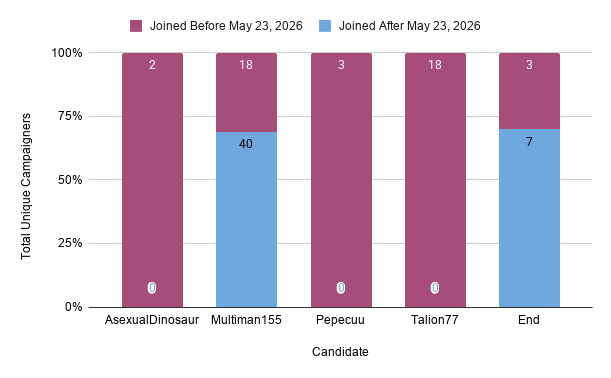
This data has led people into making claims about individual campaigns that the data doesn't actually show. The only claims that can be drawn from this data are those comparing candidates to other candidates; it fails to take into account a key measure, the breakdown of the population. The data treats the new post-Jaron players as equal to the old pre-Jaron players, which just isn't true.
When looking into the makeup of the population after the Jaron video, I first looked at the stats posted in Server-Announcements as seen below. I am in current attempts to get the data for June during the election, but have failed to do so. I plan to make an update to this article if that data is secured.
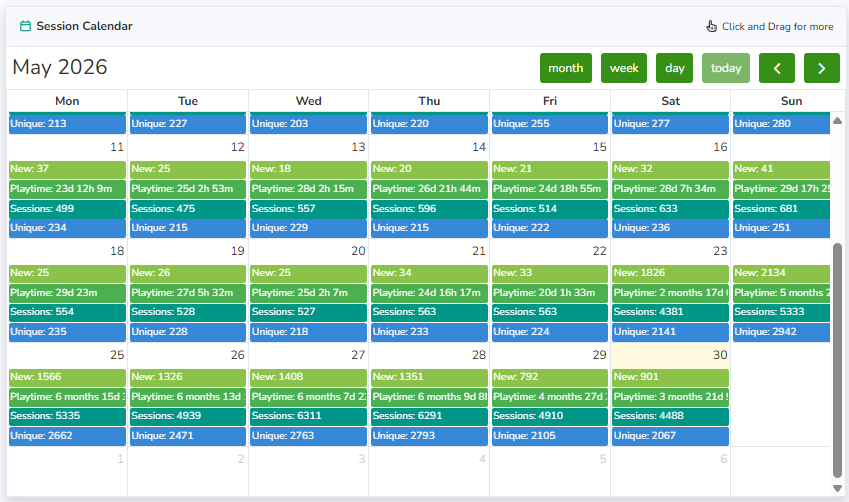
If we do a little bit of math by taking the average of the unique players in the 8 days from May 23rd-30th, which are after the Jaron video, and compare it to the 8 days just before the Jaron video. The averages come out to 2493 daily unique players post-Jaron and 231 daily unique players pre-Jaron. This means that the current population makeup is about 91%, new post-Jaron players.
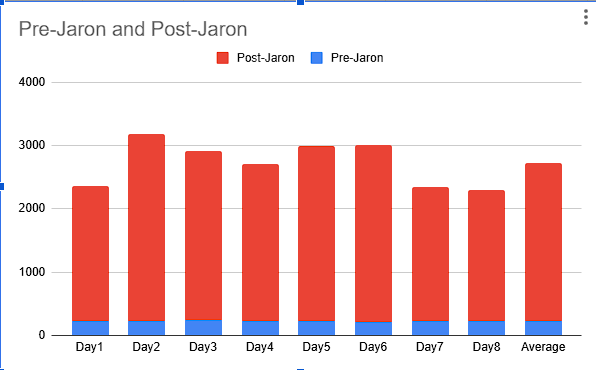
This means that at random, if you picked 10 players, around 9 of them will be post-Jaron. This also means that if campaigns were picking players at random to post campaign messages, we should expect about 91% of their messages to be posted by post-Jaron players. If we divide their actual percentage of Post-Jaron players by the expected percentage, we will get a score centered around 1, which is exactly expected. Less than 1 is under expectation and greater than 1 is over expectation.
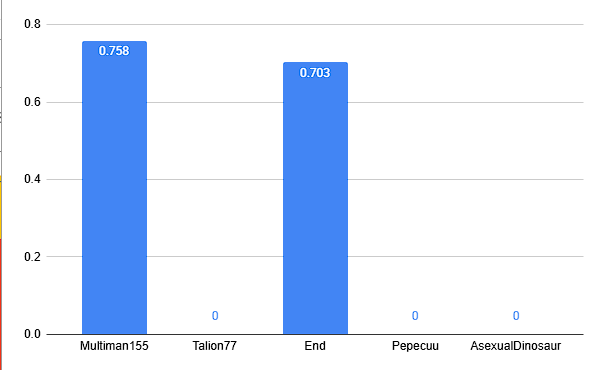
As we can see, not a single candidate even reached 0.8, with three of them having scores of 0. This is far from the expected breakdown when looking at the population makeup. This shows that all presidential candidates actually underutilized the new post-Jaron players. While it is fair to say that some utilized the new players more then other, it is actually fairer to say that individually they all overutilized older players in their campaigns.
Next, Juniper looked at how established these campaigners are by looking at mutual servers and friends. Now, while I don't have anything wrong with what the data shows, I feel that how the data is presented is another issue. She claims that:
"So we have two campaigns drawing on a large base of poorly established new players."
This presumes that it is possible to have a highly established new player, which I don't believe is realistic with how this is being measured. Usually, the accumulation of servers and friends takes time. I don't know about the average player, but if I don't recognize the name on the friend request, I don't accept it. Such recognition takes time and constant reinforcement by seeing the player in chat or doing other things. Joining servers outside the main Discord also takes time. Usually, people only join those servers when they have a need or desire inside them, which doesn't happen on day 1. By the time they reach a high score on this metric created by Juniper, I am not sure they would still be considered a "new" player anymore, especially since the measurement of "new" is joining the server less than 3 weeks ago, on or after May 23rd.
Finally, to discuss the last graph about campaign finances, because she was unable to get an actual figure from Multiman, his data is just another representation equal to the number of campaign messages sent. All she did was take the average spent on other campaigns and multiply that by the number of messages for multiman.
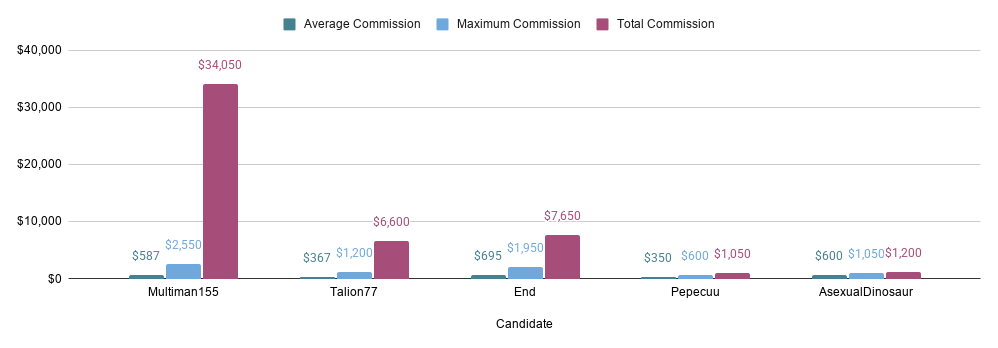
While it is interesting to see that a potentially high amount was spent, it would actually be more interesting if the opposite were true. Because 60% of his campaign used new post-Jaron players, if he were underpaying them, it would go to show that he was possibly taking advantage of them. But instead, we get a statistic with an identical value to the first graph of the article with respect to Multiman
The article overall shows great investigative journalism, and while the data does hold a lot of information on its own, without this necessary context, people walked away with the wrong impression. This is one of the reasons that it is important to present data properly, as if you look at any data long enough, you will get any story you want. Data is only as powerful as the context.
Sign in to join the conversation.
- juniperfig📰6/12/2026
Hi!! Thank you so much for writing this :O I've put up a response on my blog :D

More from Ko's Thoughts
View all in Ko's Thoughts →
Elsewhere on Gnomestack
Browse all posts → Free
Free Lenore's Summaries
The 6/7 Revolution - What was it, exactly?
Left wondering what the hell exactly happened during the 6/7 Revolution?
by Lenore Eksplosive ·
 Free
Free Juniper Blog
In Response To "Addressing the State of the Server"
This is not just about Julia's deadname. End's staff abuse goes far beyond one incident. Don't let them control the narrative.
by juniperfig ·